RE:SCAPE
- Year
- 2025
- Course
- DES 302
- Location
- Wreck Beach, UBC, Vancouver, BC
- Program
- Participatory waste cycles
- Note
- Scale bars are not applicable
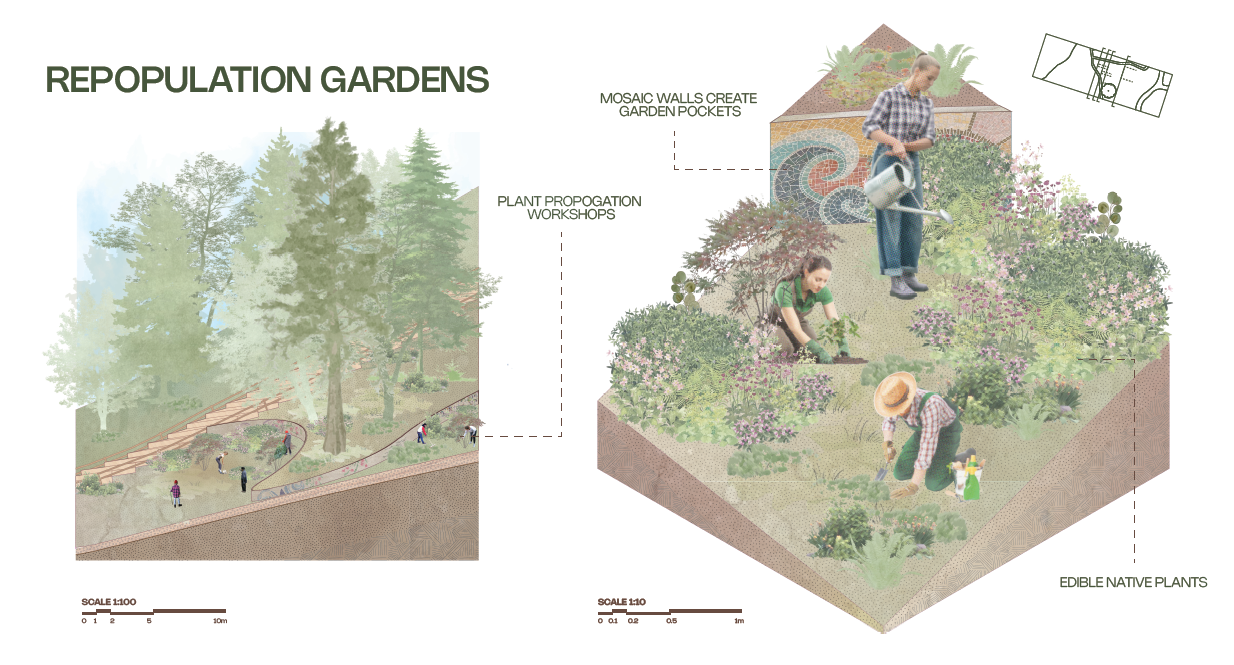
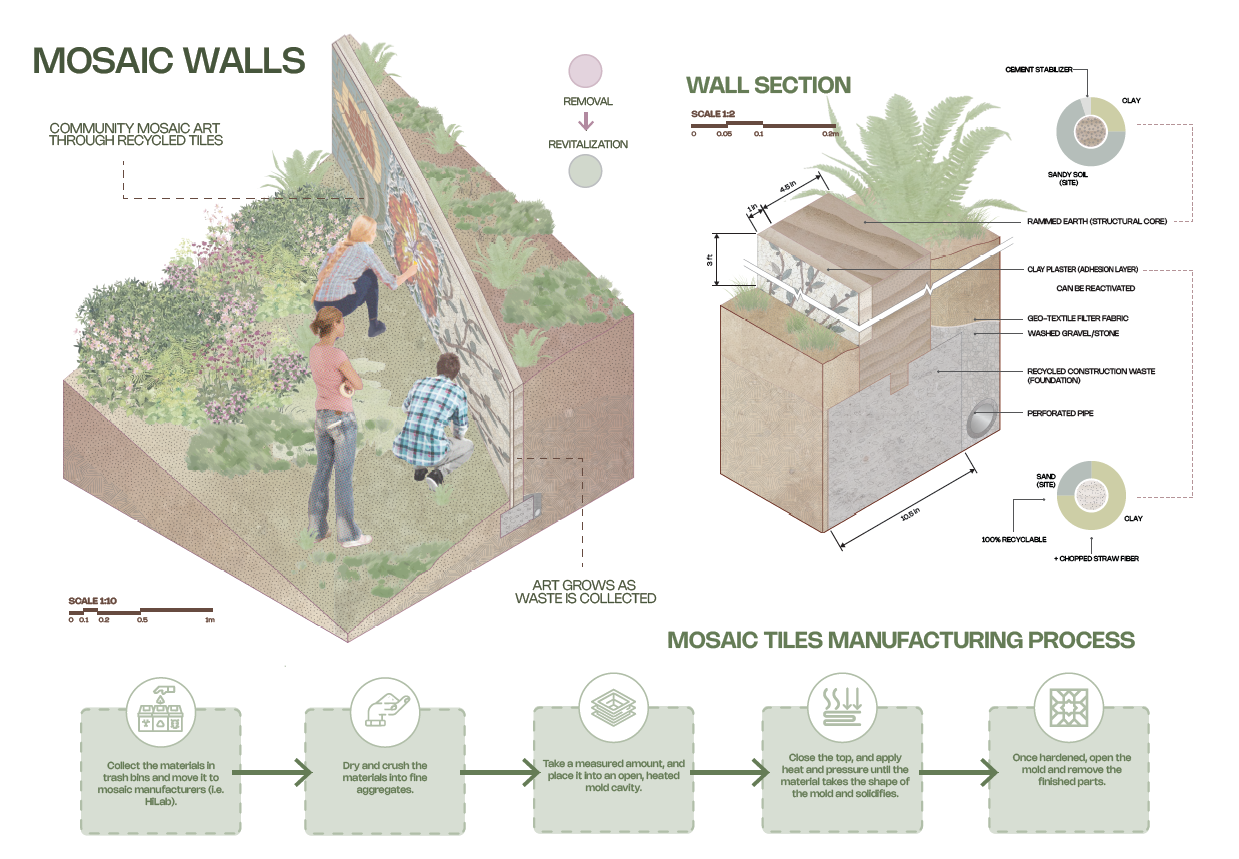
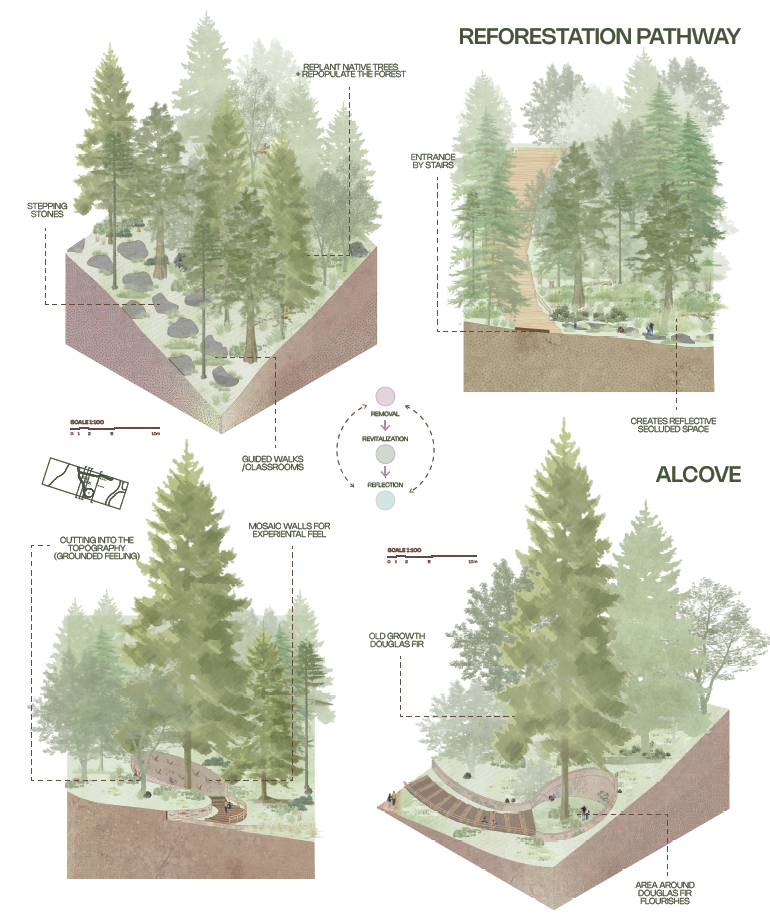
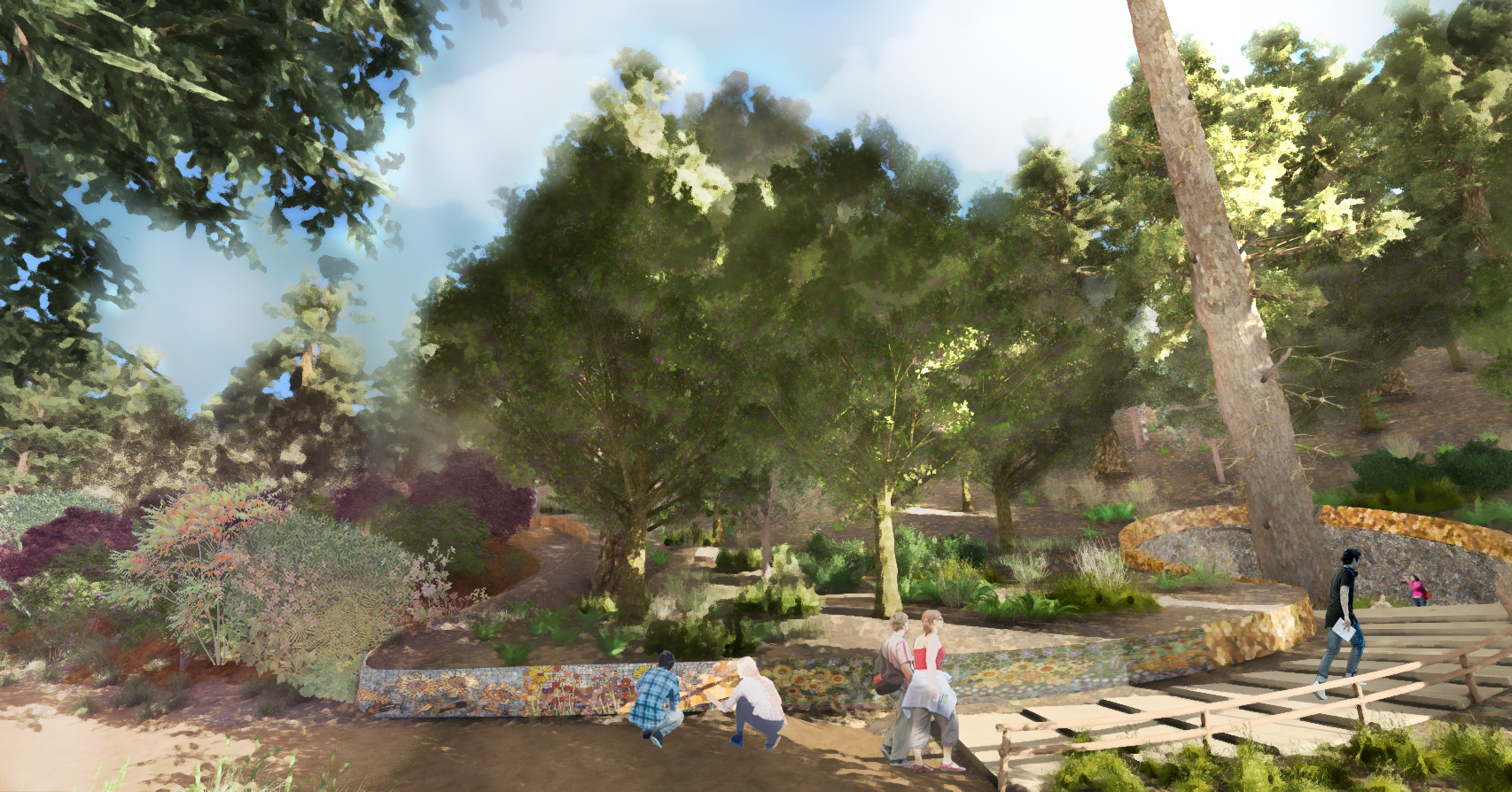
RE:SCAPE transforms the site analysis of Wreck Beach into a proposal for participatory remediation. The design introduces three key interventions: a reforestation pathway that stabilizes the slope through native planting, repopulation gardens that use garden pockets to host plant propagation workshops, and mosaic walls that serve as community art while managing recycled waste. The project creates a feedback loop between removal and revitalization, inviting visitors to engage directly with the shoreline's ecological recovery.
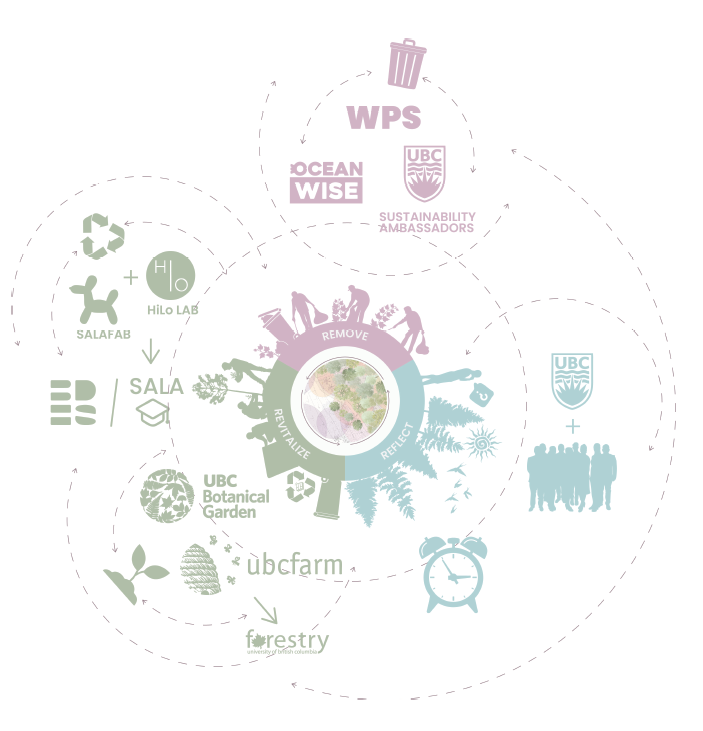
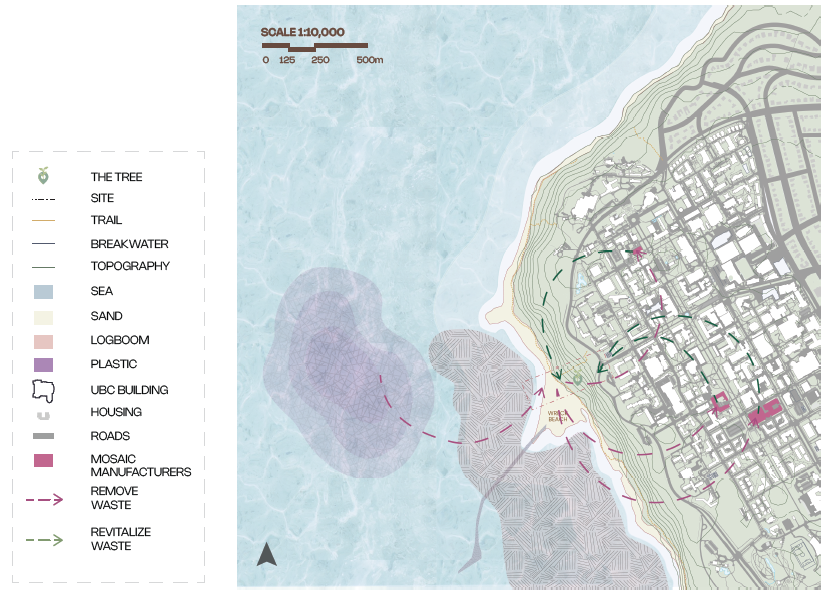
Stakeholders and waste mapping
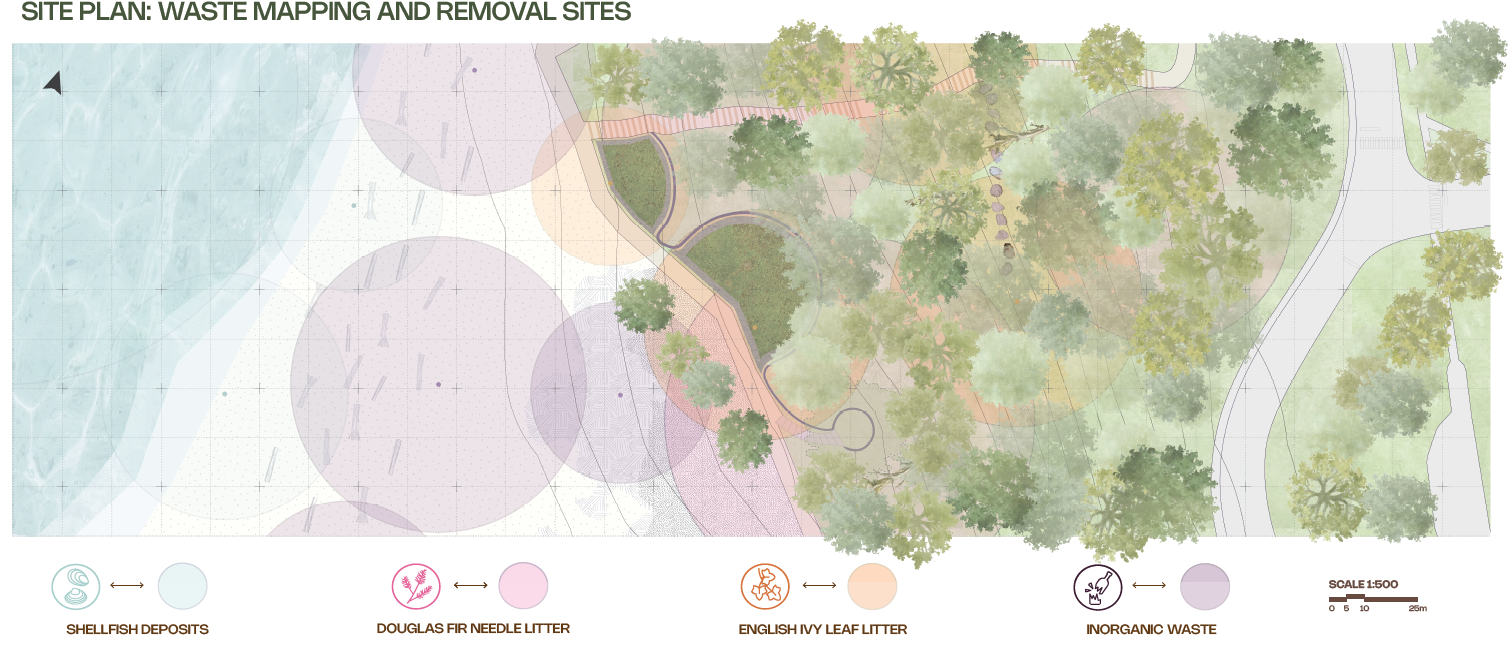
Mapping the cycle of removal and revitalization through a stakeholder diagram and site plan of waste mapping and removal sites.
Reforestation and slope stability
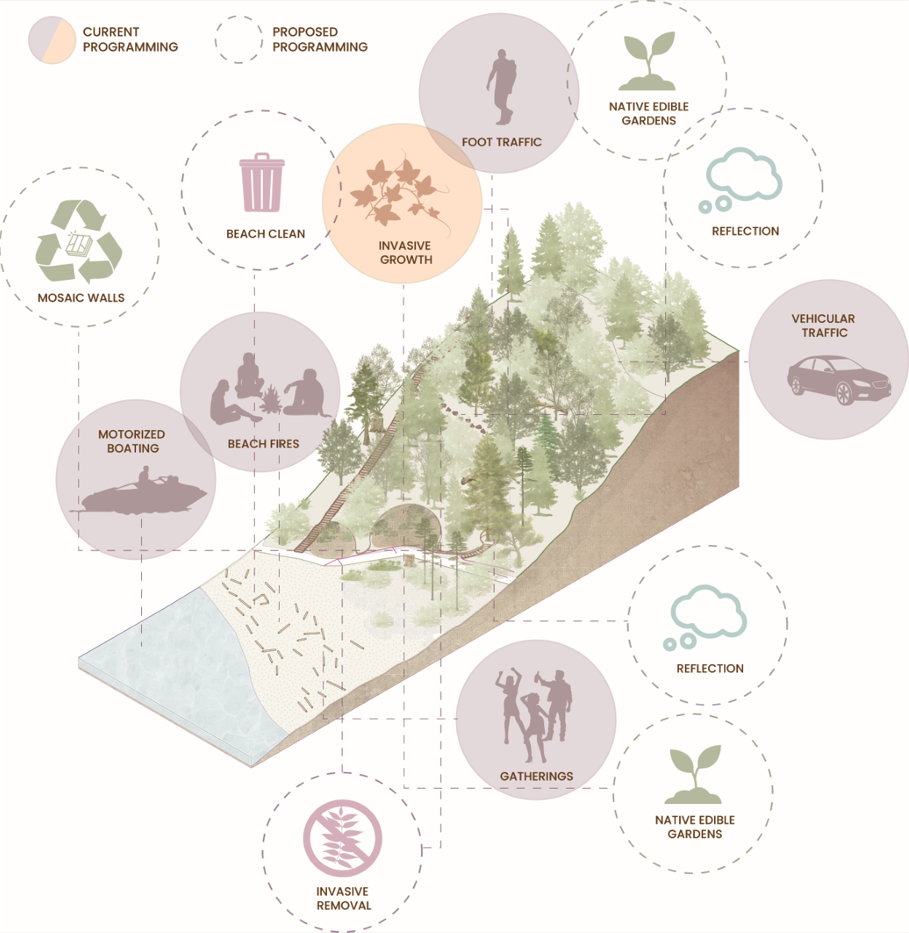
A site plan and axonometric study of the proposed programming: motorized boating, beach fires, and foot traffic are redirected through native edible gardens and invasive removal sites.
Repopulation gardens and mosaic walls
Detailed studies of the repopulation gardens and mosaic walls - community art created through recycled tiles and rammed earth construction.
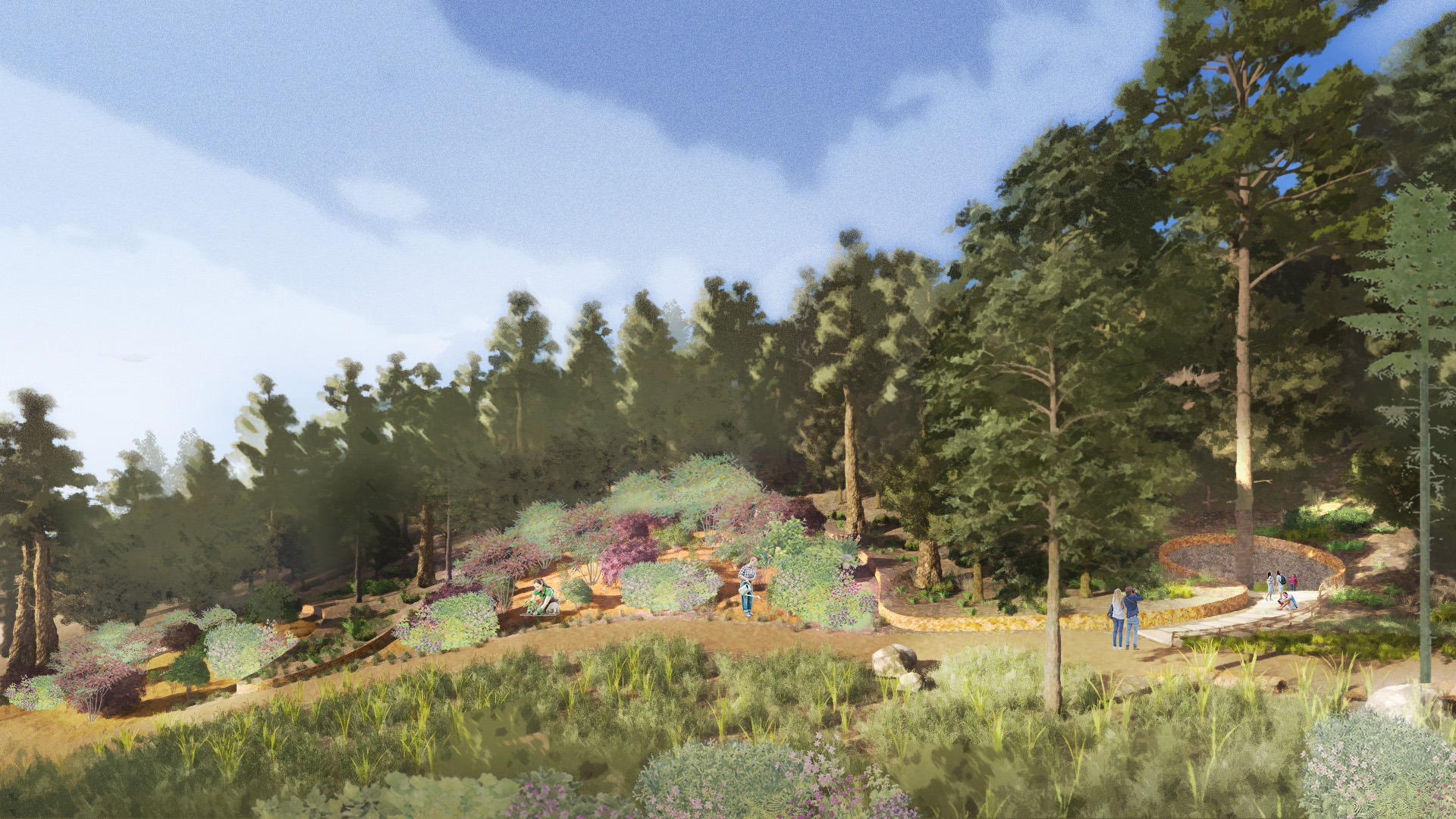
Embodied perspectives
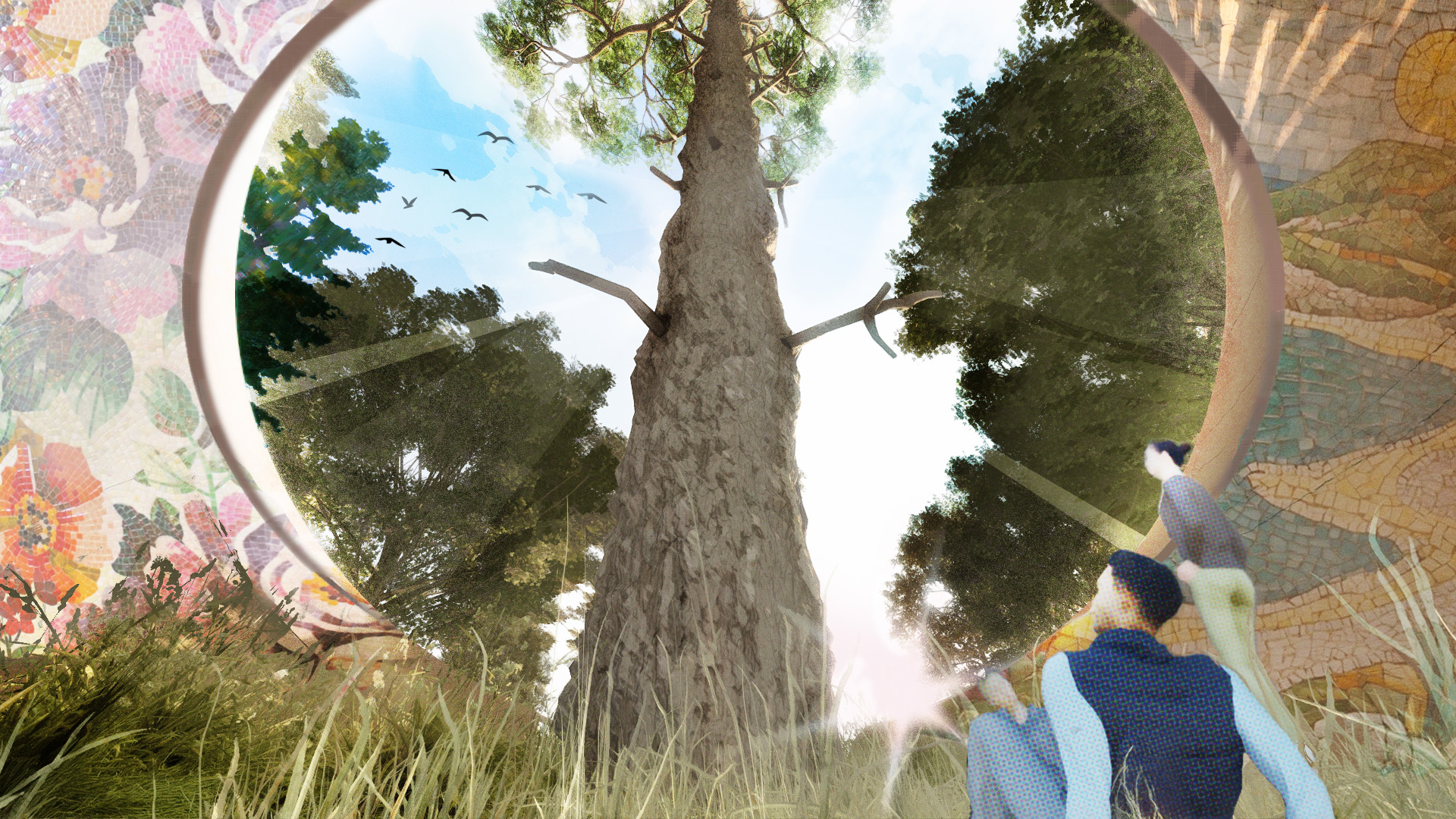
Final renders showing the reforestation pathway, the garden isometric path, and the disembodied perspective looking up through the canopy.
- Year
- 2025
- Course
- DES 302
- Location
- Wreck Beach, UBC, Vancouver, BC
- Program
- Participatory waste cycles
- Tools
- Rhino, Illustrator, Photoshop, InDesign
- Collaborators
- Dayson H., Hannah J.